
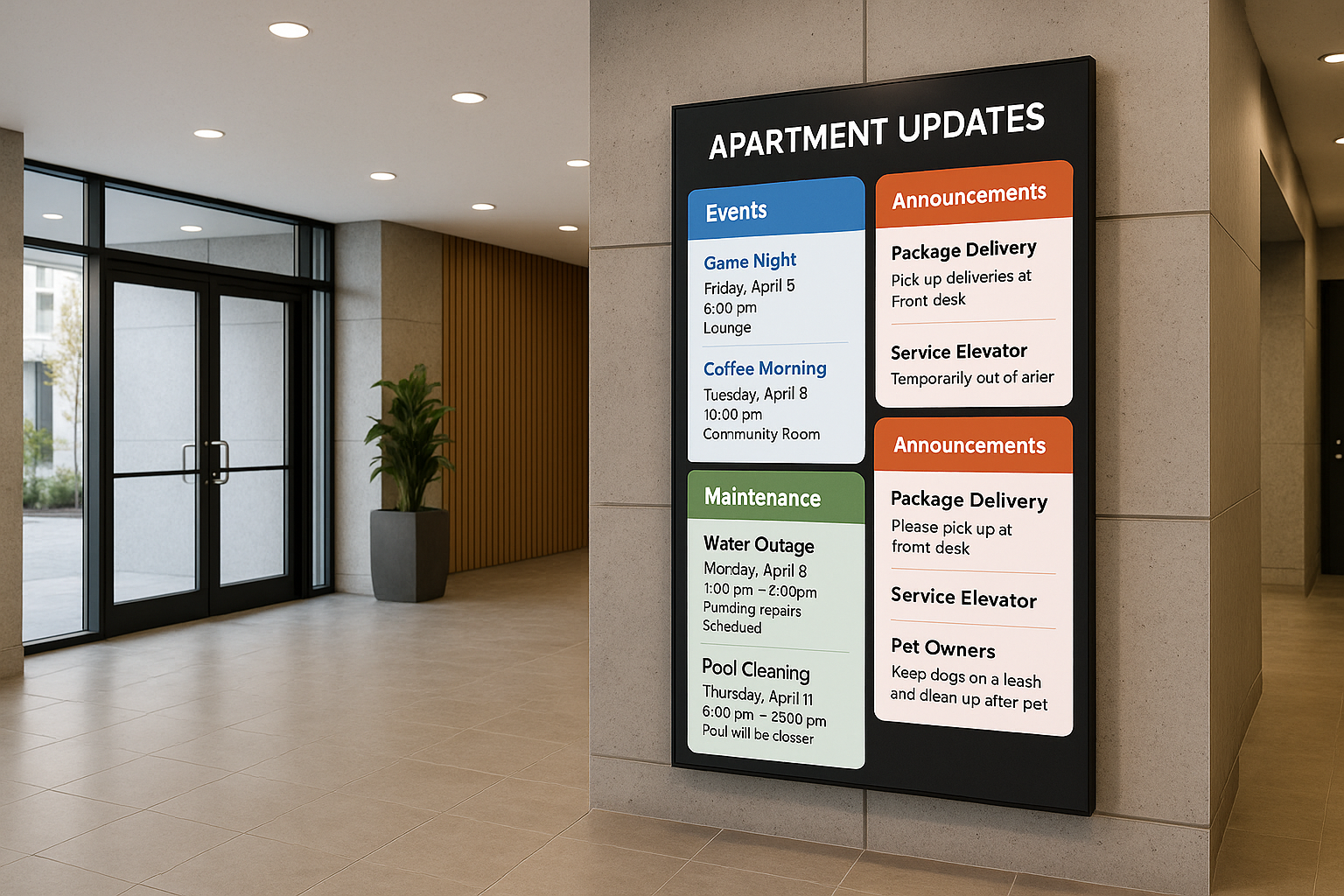
In recent years, the way residents communicate within apartment complexes has evolved dramatically. Traditional printed bulletin boards once served as the central source of updates, announcements, and community news. However, these static boards often fell short—messages could be missed, notices would fade or tear, and outdated information would clutter the space. As communities grew larger and more diverse, the demand for efficient, accessible, and modern communication became undeniable.
Digital bulletin boards have emerged as a powerful response to this demand. Unlike their traditional counterparts, these boards combine technology and design to display real-time updates in visually appealing formats. Whether installed in lobbies, hallways, or common areas, digital boards can broadcast everything from upcoming events and maintenance schedules to urgent alerts. This not only streamlines communication but also creates a sense of inclusivity where every resident can stay informed with ease.
The move toward digital communication is also a reflection of broader societal changes. As people increasingly rely on screens for news, entertainment, and daily tasks, digital bulletin boards integrate naturally into modern living. By adopting this technology, residential complexes keep pace with innovation, showing a commitment to improving resident experience and community management.
Enhancing Resident Engagement Through Real-Time Updates
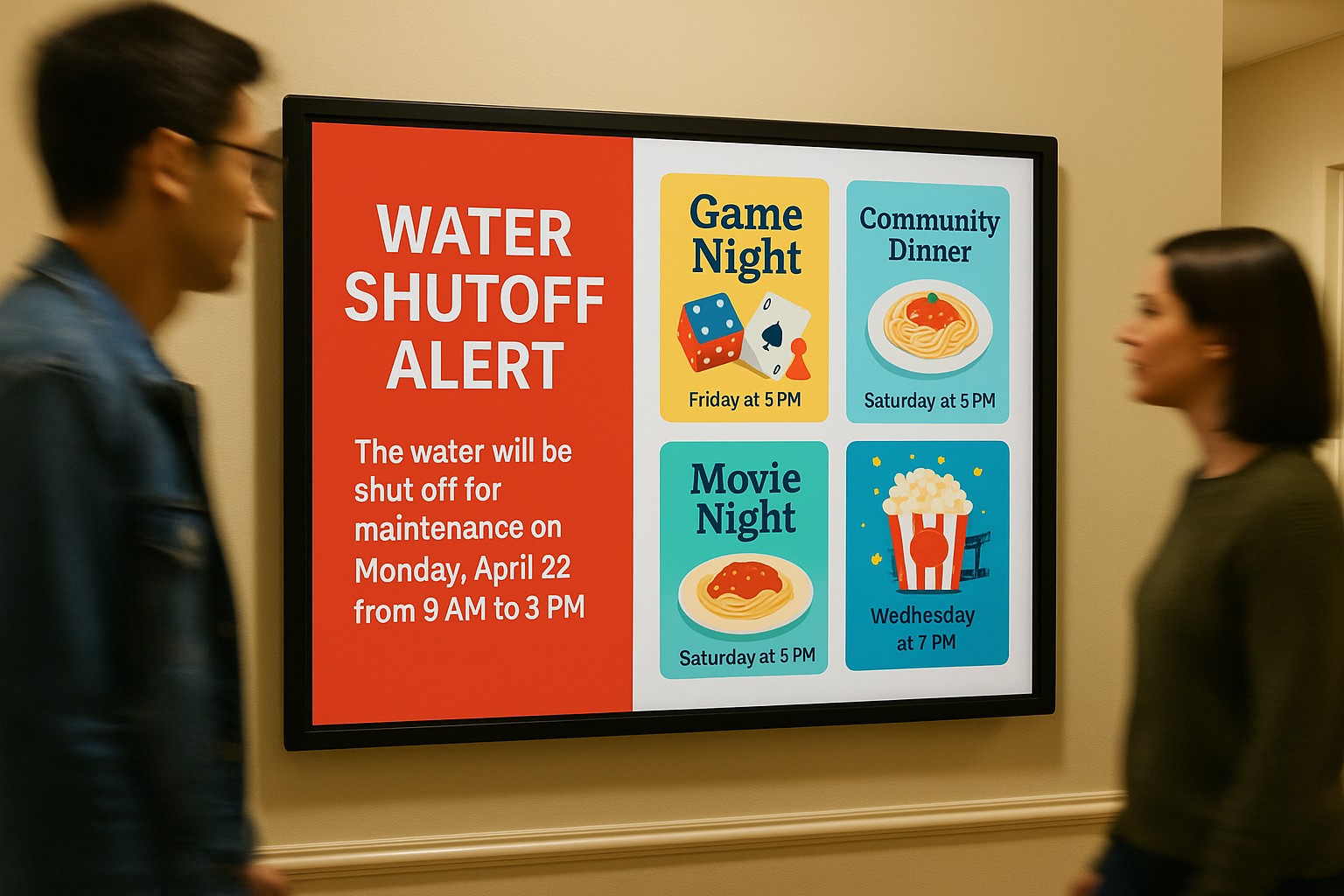
One of the greatest advantages of digital bulletin boards is their ability to deliver updates instantly. In traditional systems, property managers would post flyers or paper announcements, which required time and manual effort. Important information could easily be overlooked, and residents often had to rely on chance encounters with the bulletin board. Digital solutions eliminate this gap by allowing property managers to upload announcements directly to the system, ensuring that messages appear instantly across all designated screens.
This real-time capability proves especially valuable for urgent notifications. In situations like unexpected water shutoffs, elevator maintenance, or weather alerts, speed matters. A digital bulletin board allows managers to communicate these updates within seconds, reaching residents immediately as they pass through common areas. This immediacy fosters trust and confidence in management while ensuring that residents can prepare and adjust quickly.
Beyond emergencies, digital bulletin boards boost resident engagement by making everyday communication more dynamic. Content can be customized with visuals, animations, or even interactive QR codes, creating a more appealing and engaging experience compared to paper flyers. This encourages residents to pay attention and remain connected to their community, rather than ignoring repetitive or outdated announcements.
Building a Stronger Community with Shared Information
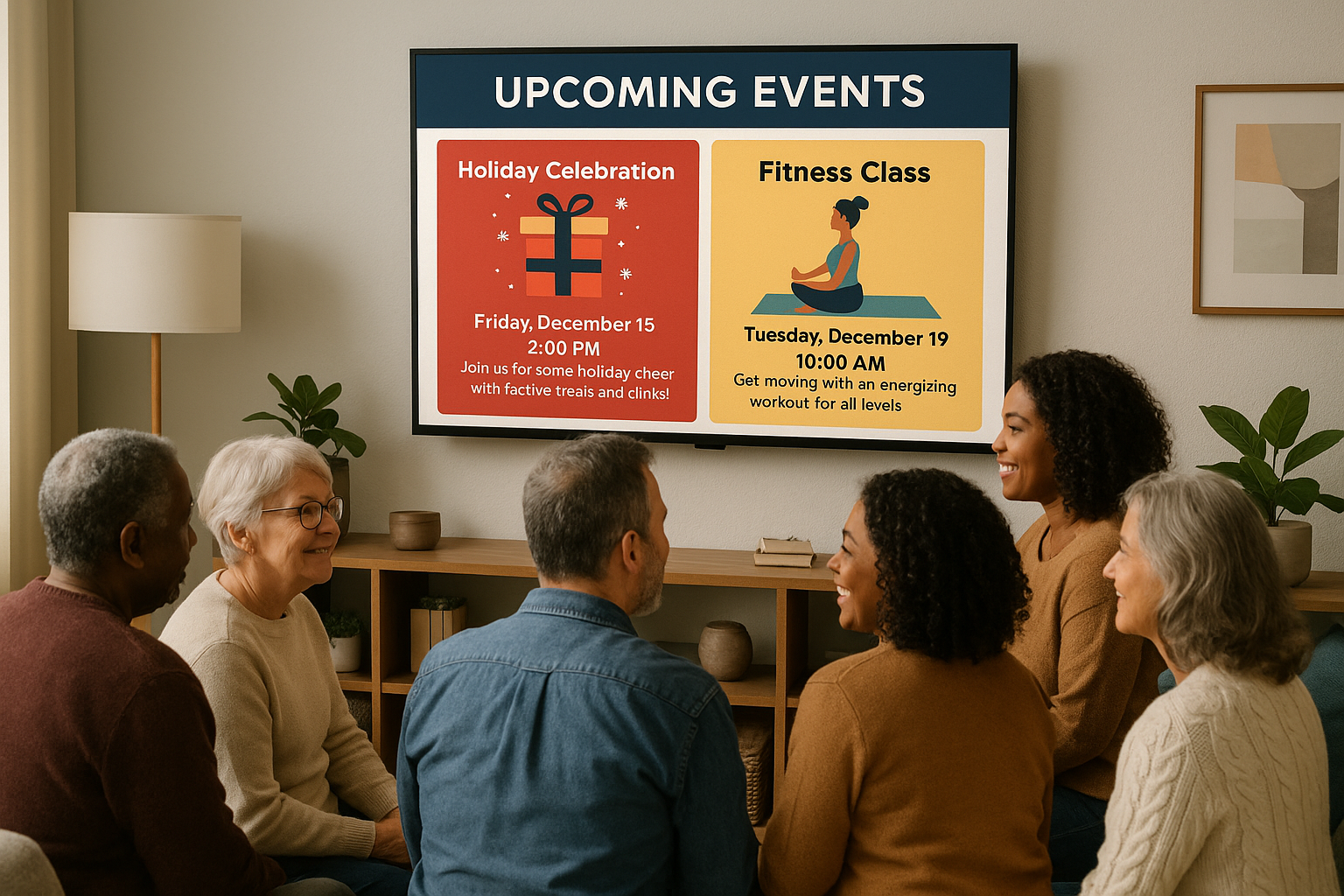
Effective communication is key to building strong communities within residential complexes. Digital bulletin boards do more than just share updates; they foster a culture of openness and inclusivity by ensuring that information is accessible to everyone. When residents feel informed, they are more likely to participate in community activities, follow building guidelines, and interact positively with neighbors.
These platforms allow property managers to highlight community events such as holiday celebrations, fitness classes, or resident meetings. By giving equal visibility to all events and updates, digital boards ensure that every resident has an opportunity to engage, regardless of their schedule or background. This democratization of information contributes to a stronger sense of belonging and unity within the complex.
Additionally, digital bulletin boards serve as a bridge between management and residents. Instead of viewing the property office as distant or unapproachable, residents begin to see management as transparent and proactive. This improved relationship reduces misunderstandings, builds trust, and encourages residents to voice their feedback or concerns. Over time, these practices create a community where communication flows smoothly, and everyone feels valued.
Cost Efficiency and Sustainability of Digital Bulletin Boards
While digital bulletin boards may require an initial investment, they prove to be cost-efficient in the long run. Traditional bulletin boards often involve recurring costs for paper, ink, and labor required to print and post updates. These expenses accumulate quickly, especially in large complexes where frequent updates are necessary. By contrast, digital solutions eliminate these recurring costs, reducing the financial burden on property management.
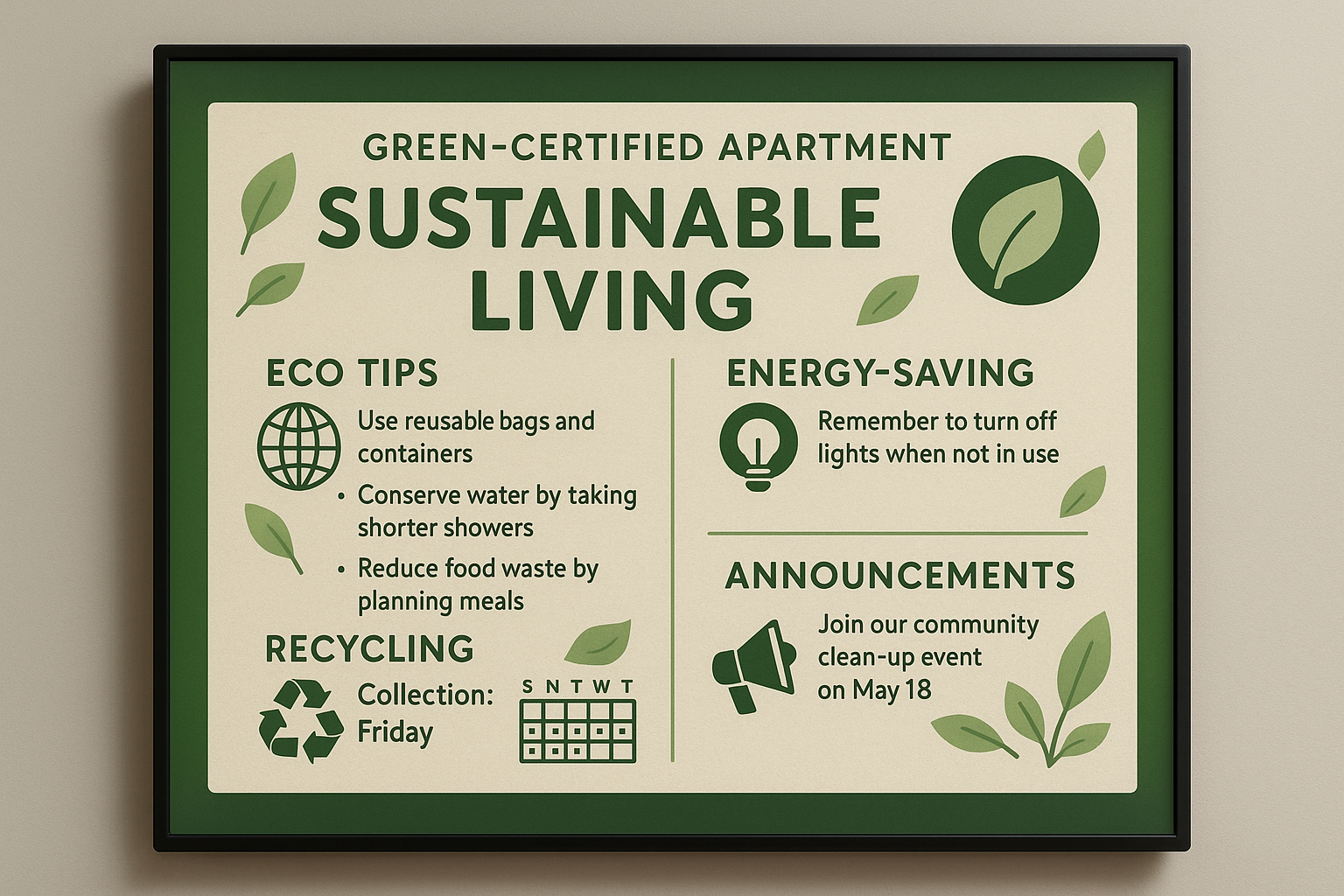
Sustainability is another major advantage. Paper-based announcements contribute to waste, and when notices are constantly updated, discarded flyers create unnecessary environmental impact. Digital boards align with eco-friendly practices by reducing paper usage and minimizing carbon footprints. For residential complexes that prioritize sustainability, this transition represents not only a practical but also a socially responsible decision.
Furthermore, digital bulletin boards can integrate with other smart building technologies. Features like scheduled updates, automated reminders, or connections with mobile apps ensure that communication remains efficient without requiring constant manual effort. This streamlined approach saves both time and money, while also demonstrating that the complex is committed to adopting modern, sustainable solutions.
Conclusion: The Future of Apartment Communication
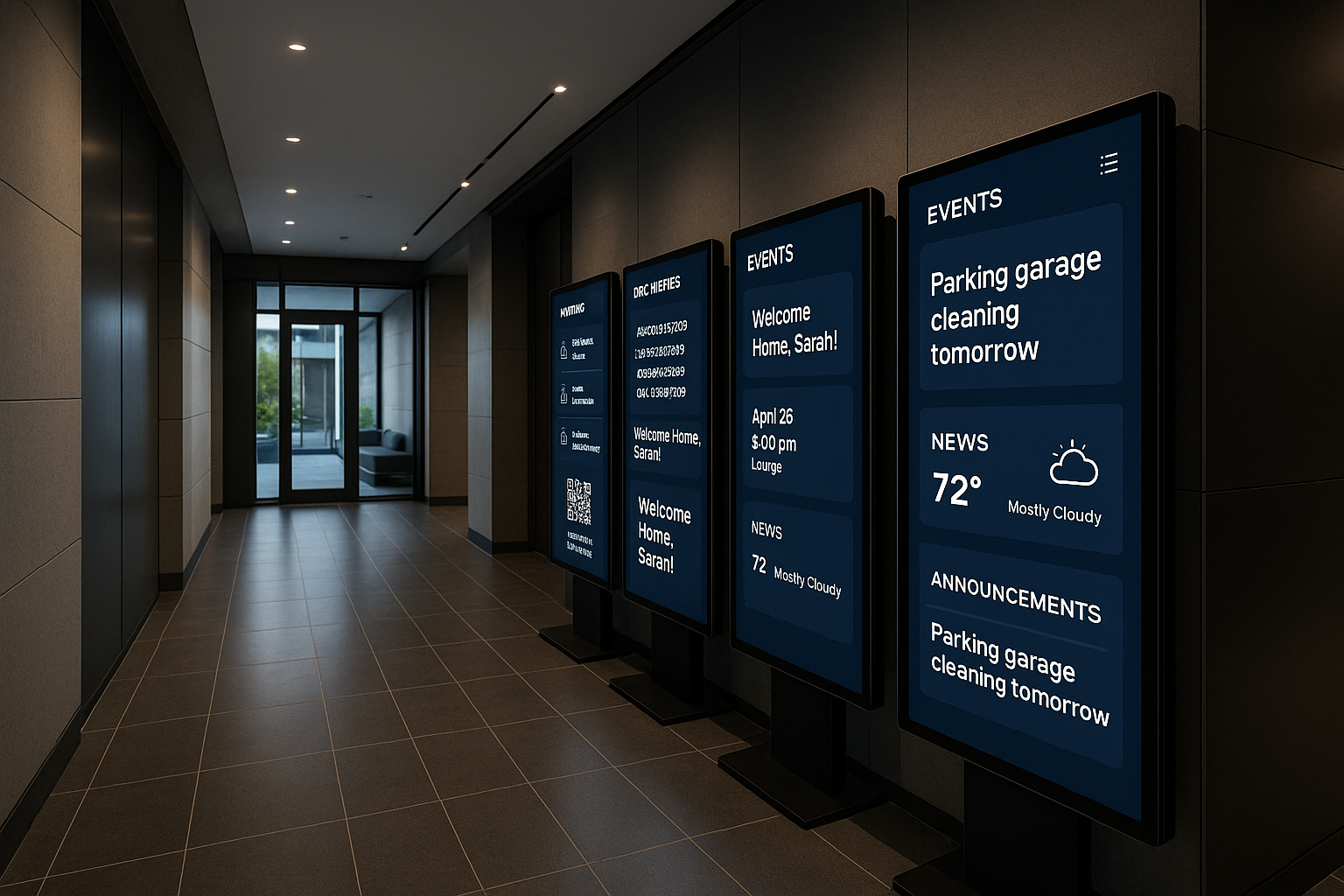
The adoption of digital bulletin boards marks a transformative shift in how residential complexes manage communication. By replacing outdated paper-based systems with dynamic, real-time displays, property managers can foster stronger resident engagement, build community trust, and streamline operations. For residents, this shift means reliable access to information, greater transparency, and a stronger connection to their community.
Looking ahead, digital bulletin boards are expected to evolve even further, incorporating more interactive features, integration with mobile devices, and even AI-driven personalization. These advancements will continue to strengthen the communication bridge between residents and property managers, ensuring that apartment living becomes not only convenient but also more connected and engaging.
Ultimately, digital bulletin boards represent more than just a communication tool—they symbolize the future of residential living. By embracing technology, apartment complexes show that they value both efficiency and community, laying the foundation for better relationships and enhanced resident satisfaction.
RELATED POSTS