
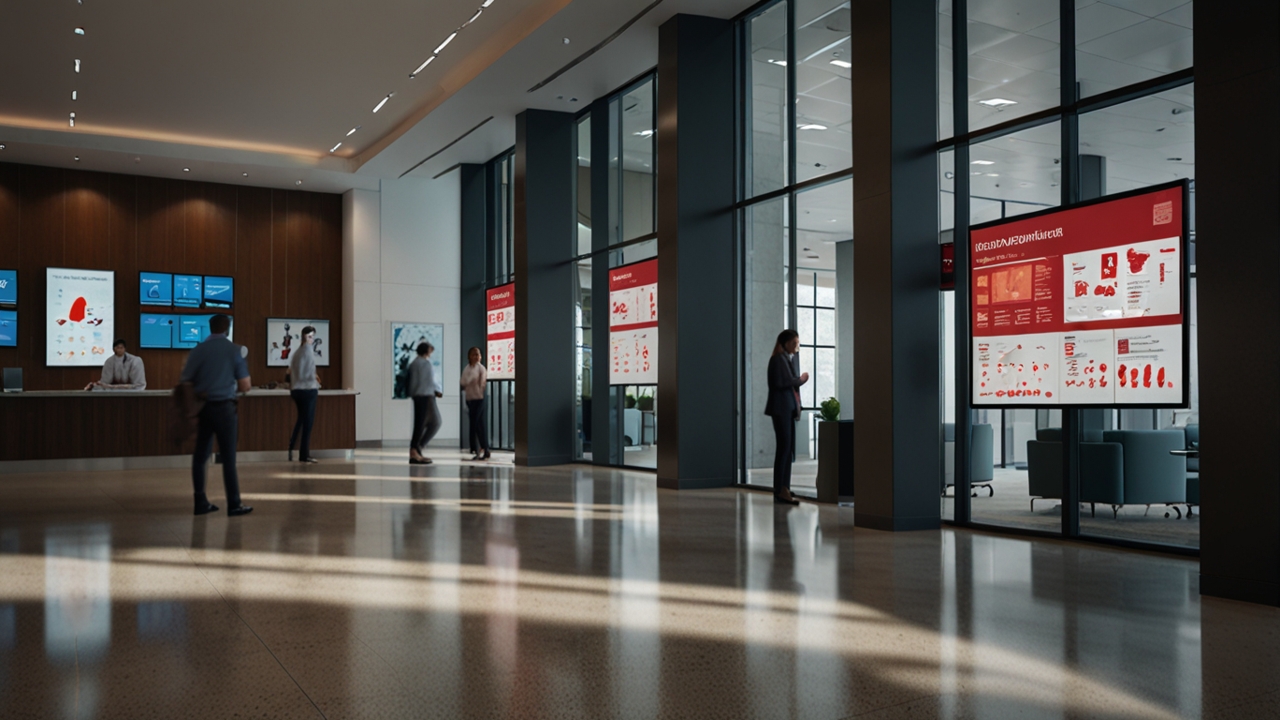
Digital signage plays a critical role in strengthening workplace safety by delivering real-time information that employees can instantly understand and act upon. In corporate office environments, where staff movement, shared facilities, and operational changes occur daily, static safety notices often become outdated or ignored. Digital displays overcome this limitation by presenting dynamic safety messages such as emergency alerts, evacuation instructions, weather warnings, or system outages. This immediate communication ensures employees receive accurate information exactly when it matters most, reducing confusion during high-pressure situations.
Beyond emergencies, real-time communication through digital signage supports everyday safety awareness. Offices can display reminders about fire exit locations, elevator capacity limits, or hygiene protocols in high-traffic areas such as lobbies, break rooms, and corridors. By rotating and refreshing content, digital signage prevents message fatigue and keeps safety top-of-mind without overwhelming employees. This continuous reinforcement helps create a culture where safety becomes a shared responsibility rather than an afterthought.
Digital signage also allows centralized control, ensuring consistent safety messaging across all office floors or branches. Facility managers and safety officers can update content instantly without relying on printed notices or manual distribution. This consistency is especially important for large corporate offices, where miscommunication can lead to unsafe behavior. With clear, timely, and visible safety communication, digital signage becomes a reliable tool for protecting employees and maintaining operational continuity.
Supporting Emergency Preparedness and Response

Effective emergency preparedness depends on clarity, speed, and visibility, all of which digital signage delivers exceptionally well. During emergencies such as fires, earthquakes, or security threats, employees may not have time to search for instructions or read lengthy manuals. Digital signage can instantly switch to emergency mode, displaying bold, easy-to-follow instructions that guide occupants on what actions to take and where to go. This immediate visual guidance reduces panic and helps maintain order during critical moments.
Digital signage can also integrate with emergency systems, allowing automated responses when alarms are triggered. For example, screens can display evacuation routes that adjust based on the affected area, ensuring employees avoid danger zones. This adaptability is especially valuable in large office buildings with multiple exits, stairwells, and departments. By providing location-specific instructions, digital signage enhances the effectiveness of emergency response plans and minimizes risk.
After an emergency, digital signage continues to support safety by communicating recovery updates and next steps. Messages such as building re-entry instructions, safety inspections, or remote work notices help employees stay informed without relying on emails that may be overlooked. This ongoing communication reinforces trust in workplace safety measures and demonstrates the organization’s commitment to employee well-being before, during, and after emergencies.
Reducing Workplace Accidents Through Visual Guidance

Workplace accidents often occur due to lack of awareness or unclear instructions, even in low-risk office environments. Digital signage helps reduce these incidents by providing visual guidance that is easy to understand at a glance. Displays can highlight wet floor warnings, restricted areas, equipment usage guidelines, or temporary hazards caused by maintenance work. By placing screens near potential risk zones, offices can proactively prevent accidents before they happen.
Visual communication is particularly effective because it transcends language barriers and varying levels of safety training. Clear icons, animations, and short messages ensure that all employees, visitors, and contractors understand safety expectations without confusion. Unlike printed signs that blend into the background over time, digital signage captures attention through motion and brightness, making safety messages more noticeable and impactful.
In addition to hazard warnings, digital signage can reinforce safe behavior through regular reminders and micro-training content. Short tips on ergonomic posture, stairway safety, or proper use of shared office equipment can be displayed throughout the day. Over time, these visual cues help shape safer habits and reduce the likelihood of repetitive strain injuries, slips, or other common office-related accidents.
Promoting Health, Wellness, and Compliance Standards

Workplace safety extends beyond physical hazards to include employee health, wellness, and regulatory compliance. Digital signage supports these areas by communicating health guidelines, wellness initiatives, and compliance updates in a clear and accessible way. Offices can display information about air quality, occupancy limits, sanitation schedules, or health advisories, helping employees make informed decisions about their work environment.
Compliance with safety regulations often requires consistent communication and documentation. Digital signage ensures that required notices, policies, and safety procedures are always visible and up to date. This visibility not only supports internal safety goals but also demonstrates compliance during audits or inspections. By maintaining accurate and current safety messaging, organizations reduce the risk of violations and associated penalties.
Wellness-focused content displayed on digital signage can also contribute to a healthier workplace culture. Messages encouraging regular breaks, hydration, mental health awareness, or stretching exercises show that the organization values employee well-being. When employees feel supported and informed, they are more likely to follow safety protocols and engage positively with workplace policies, creating a safer and more productive environment overall.
Strengthening Safety Culture Through Consistent Messaging

A strong safety culture is built on consistency, clarity, and engagement, all of which digital signage helps reinforce. When safety messages are regularly displayed and updated, employees perceive safety as an ongoing priority rather than a one-time initiative. Digital signage allows organizations to rotate content, highlight safety achievements, and recognize departments that demonstrate exemplary safety practices, fostering a sense of shared accountability.
Consistent messaging across all office locations ensures that safety standards are understood and followed uniformly. Whether employees are working at headquarters or a satellite office, digital signage delivers the same core safety messages tailored to each location’s needs. This alignment reduces misunderstandings and ensures that everyone operates under the same safety expectations, regardless of their role or workspace.
Over time, digital signage becomes an integral part of daily office life, subtly influencing behavior and decision-making. By combining informative, instructional, and motivational content, organizations can shift safety from a compliance requirement to a core value. This cultural shift not only reduces incidents and risks but also builds trust, engagement, and confidence among employees, making the workplace safer and more resilient.
RELATED POSTS