

In today’s fast-paced educational environment, effective communication is the cornerstone of a well-managed school or dormitory. Traditional methods such as paper bulletins, printed posters, and verbal announcements are gradually becoming outdated, as they often lead to missed information, clutter, and inefficiency. Smart displays, on the other hand, provide a modern, reliable, and visually engaging way to share school events, class schedules, and important updates with students, teachers, and visitors. Mounted in high-traffic areas like hallways, cafeterias, and dormitory lobbies, these digital screens can broadcast real-time updates that are instantly visible to everyone. Whether it’s announcing a parent-teacher meeting, highlighting sports day activities, or reminding students of upcoming exams, smart displays ensure that critical messages are never overlooked. By digitizing how information is shared, schools not only improve communication but also create a more connected, informed, and efficient learning community.
Smart displays also redefine how schools approach inclusivity and accessibility in communication. With customizable layouts and scheduling features, schools can present content that caters to different audiences—students, faculty, and parents—without overwhelming the display space. Information can be presented in multiple formats such as images, text, or video clips, allowing administrators to design content that resonates with diverse viewers. For dormitories, these displays can function as central notice boards for residents, showing curfew reminders, maintenance schedules, event invitations, or safety alerts. They can also support multilingual content, ensuring that international students or those from diverse linguistic backgrounds remain informed. This flexibility makes smart displays an invaluable communication asset that enhances student engagement while minimizing confusion and information gaps.
By integrating smart displays into their communication strategy, schools can also strengthen their image as tech-forward and adaptive institutions. Display systems can be connected with digital calendars, learning management platforms, or school intranets, allowing automated synchronization of schedules and announcements. For example, a change in the examination timetable or a new extracurricular activity can be updated in real time, instantly reflecting on all connected screens across the campus. This seamless integration not only reduces administrative workload but also instills a culture of timeliness and responsibility among students. Over time, these displays become an integral part of daily school life—encouraging participation, improving awareness, and creating a sense of community that extends beyond the classroom.
Enhancing Campus Communication and Engagement

Smart displays are more than just digital bulletin boards—they are strategic tools that foster engagement and strengthen communication networks across the campus. When placed in key locations such as entrance lobbies, corridors, and faculty offices, they serve as a bridge connecting all departments within a school or university. Administrators can easily share live announcements about emergencies, weather advisories, or special activities without needing to send out mass emails or printed flyers. These screens can rotate through multiple messages, ensuring every important update receives visibility. The visual appeal of dynamic graphics and animations also captures attention more effectively than static posters, ensuring that students stay informed in a way that feels natural and engaging. In dormitories, where student life continues beyond classroom hours, smart displays become essential for sharing community updates—such as dorm meetings, guest policies, or weekend social events—helping foster a more connected residential environment.
In addition, smart displays enhance collaboration and participation among students and faculty. Schools can showcase highlights such as academic achievements, sports victories, club activities, or artwork, turning digital displays into motivational showcases that celebrate student accomplishments. Interactive smart displays also open the door for new types of engagement, where students can scan QR codes for event sign-ups or view interactive maps for campus navigation. This real-time, visually rich communication approach encourages students to stay active, participate in extracurriculars, and remain connected with the broader school culture. Teachers, too, can benefit from this system by receiving automated reminders about meetings, training sessions, or schedule changes—reducing the risk of miscommunication.
Another key advantage is the ability to tailor content to different audiences throughout the campus. A high school, for instance, may use smart displays near classrooms to show timetables and academic notices, while those near the cafeteria display meal schedules and upcoming assemblies. Dormitories, on the other hand, might prioritize curfew information, laundry schedules, or weekend activities. With centralized management software, administrators can easily control what appears on each screen, ensuring the right information reaches the right audience at the right time. This targeted approach not only streamlines communication but also cultivates an environment of trust and transparency—essential qualities in any educational institution.
Promoting Efficiency, Sustainability, and Digital Readiness
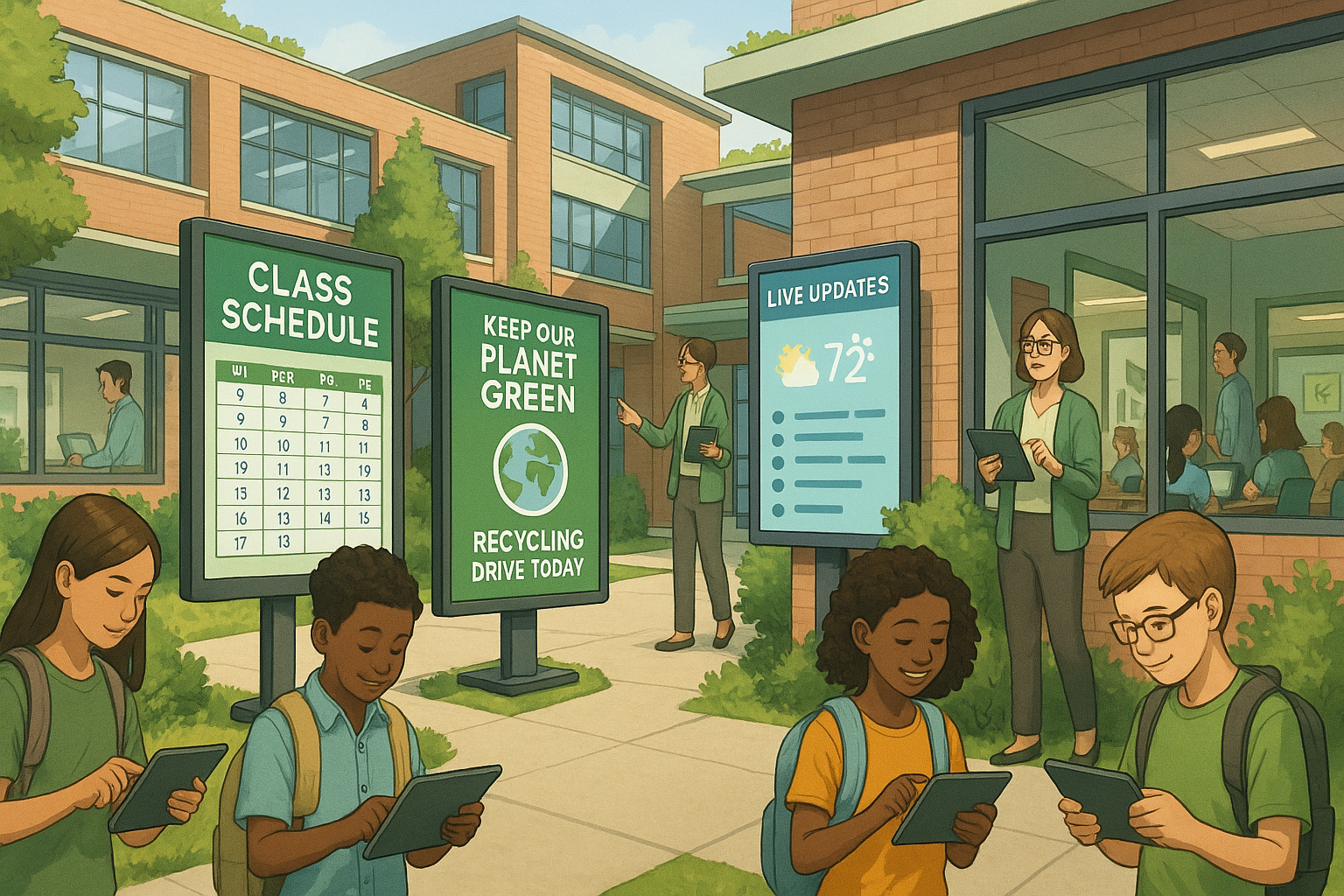
Adopting smart displays in schools and dormitories also reflects a commitment to operational efficiency and sustainability. In many institutions, managing communication through printed posters and circulars can consume significant time, money, and resources. Switching to digital displays dramatically reduces the reliance on paper, printing, and manual labor—helping schools meet sustainability goals and operate more efficiently. Updates that once took hours to distribute can now be deployed across multiple screens in seconds, allowing staff to focus on more critical tasks. In addition, scheduled content management ensures that displays are always updated automatically, minimizing the risk of outdated information lingering in public spaces. This automation supports a smoother, more professional communication flow that aligns with the fast-paced rhythm of modern education.
From an environmental perspective, smart displays contribute to the school’s green initiatives by eliminating waste and promoting responsible resource management. Students exposed to these technologies also gain awareness about the importance of sustainability, reinforcing environmental values through daily interaction with eco-friendly communication systems. Administrators can further optimize displays by setting automatic power schedules, brightness adjustments, or energy-saving modes to ensure minimal electricity consumption. Combined with long-lasting LED technology, this makes digital displays not just a communication tool, but a long-term investment in a greener, smarter campus.
Lastly, the integration of smart displays prepares schools and dormitories for a digitally ready future. As technology continues to reshape how institutions operate, adopting digital signage demonstrates adaptability and innovation—two traits that appeal to students, parents, and educational stakeholders. Schools equipped with these systems are better positioned to handle rapid communication needs, from sudden weather advisories to schedule changes during examinations. They also send a clear message of progress: that the institution values technology, efficiency, and modern learning experiences. Ultimately, smart displays transform communication from a passive act of sharing information into an interactive, sustainable, and future-focused practice that supports both academic excellence and community building.
Integrating Smart Displays With School Systems and Digital Tools

For schools aiming to create a unified digital ecosystem, integrating smart displays with existing administrative and educational systems is essential. Smart displays can sync with school management software, event calendars, attendance systems, and even emergency notification platforms. This means that when administrators update a schedule, cancel a class, or announce a new event, the change automatically appears on every connected display in real time. This seamless integration reduces manual workload and eliminates redundancy. Moreover, it ensures that all communications—academic, operational, or extracurricular—are consistent across every digital channel. For dormitories, integration with maintenance systems or security software can allow instant updates about facility issues, ensuring residents stay informed at all times.
Beyond integration, smart displays can support multimedia formats like videos, slideshows, and animations, allowing educators and staff to share interactive learning materials or awareness campaigns directly through these screens. For instance, safety training videos or student orientation guides can be scheduled to play at specific times of the day. This flexibility allows administrators to turn idle display time into an educational opportunity, maximizing the value of every screen. Schools can also use these systems to broadcast live events—such as graduation ceremonies, sports competitions, or guest lectures—across multiple buildings, ensuring that everyone can participate virtually.
Furthermore, integrating data analytics tools with smart display software can help schools monitor audience engagement and screen performance. Reports can show which announcements receive the most attention or how often content needs updating. These insights empower administrators to optimize the communication strategy, focusing on what matters most to their audience. This analytical layer transforms smart displays from static information panels into strategic communication assets that support decision-making, performance tracking, and continuous improvement in how information flows across the school community.
The Future of Smart Displays in Educational Environments
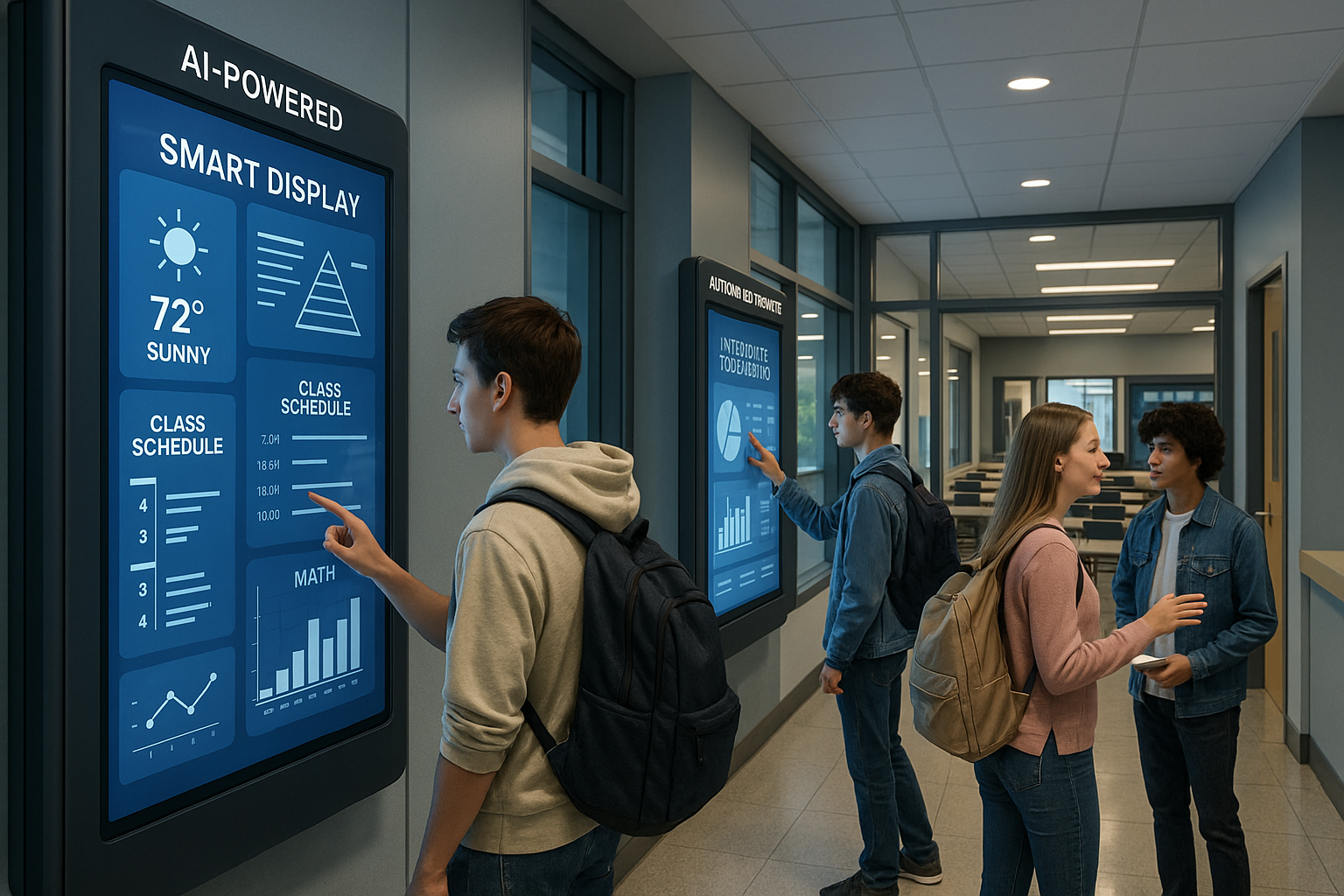
As technology continues to advance, smart displays are expected to play an even greater role in the evolution of education. With the growing adoption of Internet of Things (IoT) devices and artificial intelligence, schools will soon be able to automate their communication systems completely. Imagine displays that update automatically when a class is canceled, adjust their brightness based on ambient light, or change content dynamically according to the time of day and student traffic. These innovations will make information delivery more intelligent and responsive, creating an environment where communication happens effortlessly. In the near future, schools could also integrate voice commands or touchless interactions, enabling students to access personalized schedules or event details simply by scanning their ID or using motion gestures.
Smart displays will also play a key role in hybrid learning environments, where digital and in-person experiences blend seamlessly. In addition to displaying on-campus schedules, these systems could show virtual class links, remote lecture timetables, or reminders for online submissions. This hybrid functionality will not only improve flexibility but also ensure that students and faculty remain synchronized, regardless of location. As education becomes more digitally connected, smart displays will serve as the visual backbone of communication—linking classrooms, dormitories, libraries, and administrative offices through one cohesive digital network.
Ultimately, the future of smart displays in education lies in personalization and data-driven efficiency. Schools will be able to customize displays to fit the preferences of different departments, optimize content based on engagement metrics, and continuously evolve their communication strategies. These innovations will redefine how information is shared, making every announcement timely, every event visible, and every student more connected to the institution’s culture and goals. The digital transformation powered by smart displays will not only simplify communication—it will empower schools to cultivate smarter, more interactive, and future-ready learning environments.
RELATED POSTS