

In the digital era, the traditional methods of civic communication—such as printed bulletins, notice boards, and public address systems—are being replaced by more interactive and accessible solutions. City Halls are at the heart of local governance, serving as the main link between citizens and their government. However, many municipalities still rely on outdated communication systems that fail to capture public attention or adapt to fast-changing information needs. The introduction of digital bulletin boards has changed this dynamic, offering an efficient and engaging way to connect with citizens. These boards allow real-time updates on community events, policy changes, and emergency alerts, ensuring that information is timely, accurate, and widely accessible. Moreover, digital boards can integrate multimedia content such as videos, infographics, and scrolling announcements, making the communication experience far more dynamic than traditional posters or flyers.
Beyond their visual appeal, digital boards represent inclusivity and accessibility. Information can be displayed in multiple languages or adapted to suit individuals with visual impairments. For example, larger fonts and contrasting colors can improve readability for elderly citizens, while audio-enabled announcements can assist visually impaired individuals. City Halls that embrace this technology are not only enhancing their communication efficiency but also ensuring that no citizen is left behind due to communication barriers. This shift reflects the broader transformation of civic engagement—moving from one-way information delivery to interactive participation and transparency.
How Digital Boards Foster Transparency and Trust

Transparency is one of the cornerstones of effective governance, and digital boards play a vital role in reinforcing that trust. In many cities, citizens often feel disconnected from local decision-making due to limited access to accurate or timely information. By placing digital boards in public spaces—both inside and outside City Halls—officials can provide immediate visibility into ongoing projects, council meeting schedules, policy updates, and community programs. These displays can also broadcast live sessions of public hearings, showcase development progress, or highlight achievements within the community, fostering a stronger sense of accountability and openness. When citizens see what their leaders are working on, trust is naturally strengthened, and the perception of transparency grows.
Additionally, digital boards can reduce misinformation and confusion during times of change or crisis. For instance, during emergencies such as severe weather events or infrastructure repairs, City Halls can use digital displays to deliver verified updates and safety instructions. Unlike printed materials that take time to distribute and can quickly become outdated, digital boards allow for immediate modification of content. This speed of communication reassures citizens that their local government is responsive and proactive. Moreover, when updates are consistent and easy to access, the community is more likely to engage positively with municipal initiatives, attend local events, and participate in public consultations.
Encouraging Citizen Participation and Feedback

Civic engagement thrives when citizens feel heard. Digital boards can become the focal point for interactive participation within City Halls. Instead of merely posting announcements, they can host polls about local issues, surveys on proposed projects, and real-time feedback forms. Imagine citizens voting on community initiatives, providing input on park developments, or submitting event ideas directly through an on-screen form or QR code. This kind of engagement transforms communication from passive observation to active collaboration.
Moreover, featuring citizen-generated content—such as local success stories, volunteer highlights, or neighborhood initiatives—can foster a stronger sense of belonging and pride. City Halls can use digital boards as a stage to celebrate local heroes and community achievements, reminding citizens that their contributions are valued and recognized. By giving people a voice in public spaces, digital boards help cultivate a culture of collaboration and inclusivity that strengthens the democratic process.
Integrating Digital Boards Into Smart City Infrastructure

As cities become smarter and more connected, integrating digital boards into the broader smart city infrastructure offers even greater potential. City Halls can connect these boards with data-driven systems that monitor traffic, environmental conditions, and public transport updates. For example, digital displays could show live air quality reports, available parking spaces, or public transport arrival times. This creates a seamless information ecosystem where citizens receive relevant updates that enhance daily urban living.
Additionally, smart integration allows City Halls to analyze engagement data. By tracking which announcements receive the most attention, city officials can understand public interests and adjust their communication strategies accordingly. This data-driven approach ensures that government messaging stays relevant, timely, and impactful. Ultimately, integrating digital boards into smart city frameworks positions City Halls as leaders in innovation, paving the way for more connected and responsive communities.
Conclusion: Building the Future of Civic Engagement
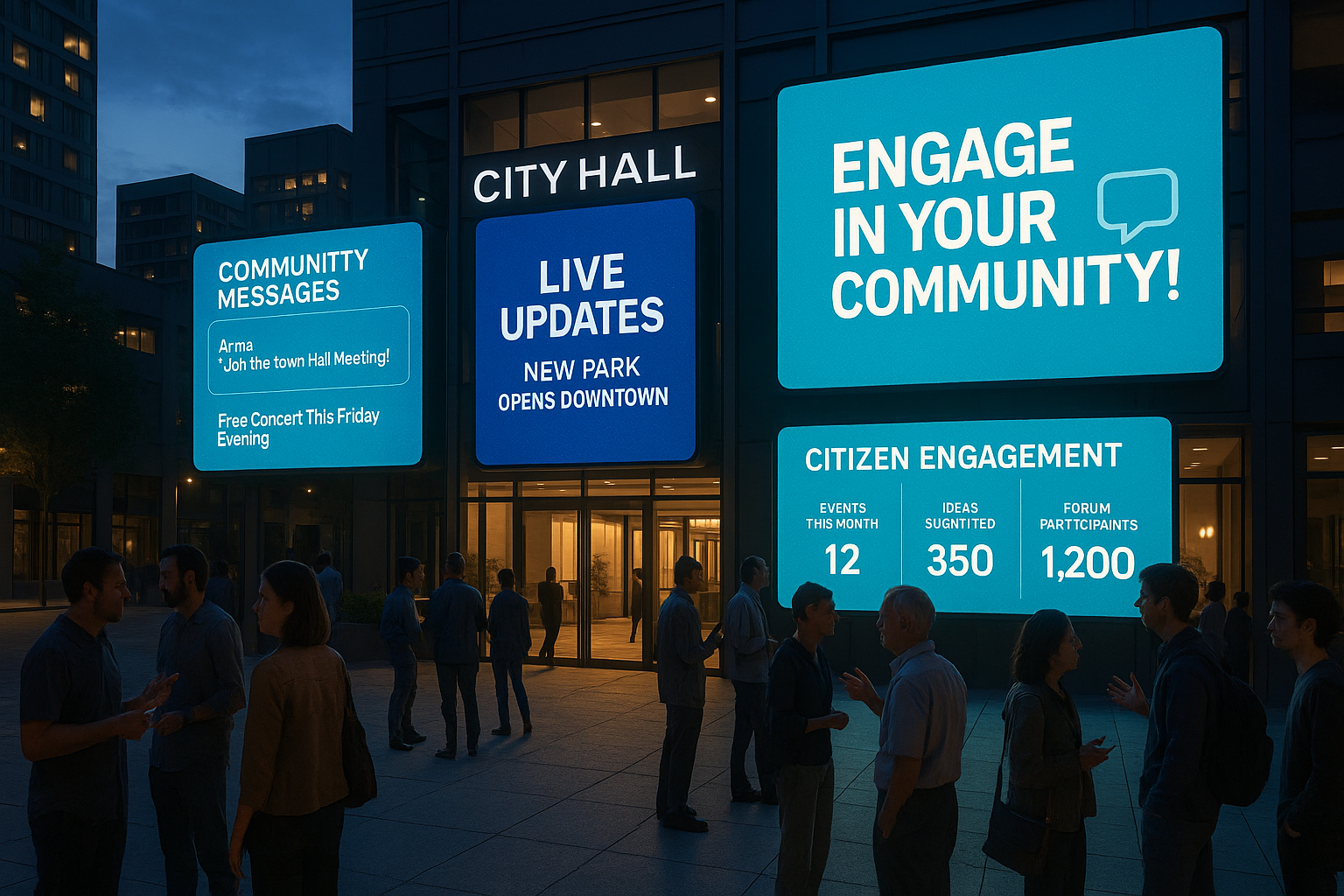
Digital boards are not just technological upgrades—they are gateways to more open, transparent, and participatory governance. For City Halls, they represent an opportunity to transform communication from static information sharing into dynamic, two-way interaction. By embracing this technology, municipalities can improve accessibility, promote trust, and empower citizens to take an active role in community life.
The adoption of digital boards is a step toward a more responsive and inclusive future. When City Halls communicate effectively, citizens become partners in progress rather than distant observers. Through real-time updates, transparency, and engagement, digital boards can reshape how governments connect with people—bringing civic communication into a new era of openness and collaboration.
RELATED POSTS