
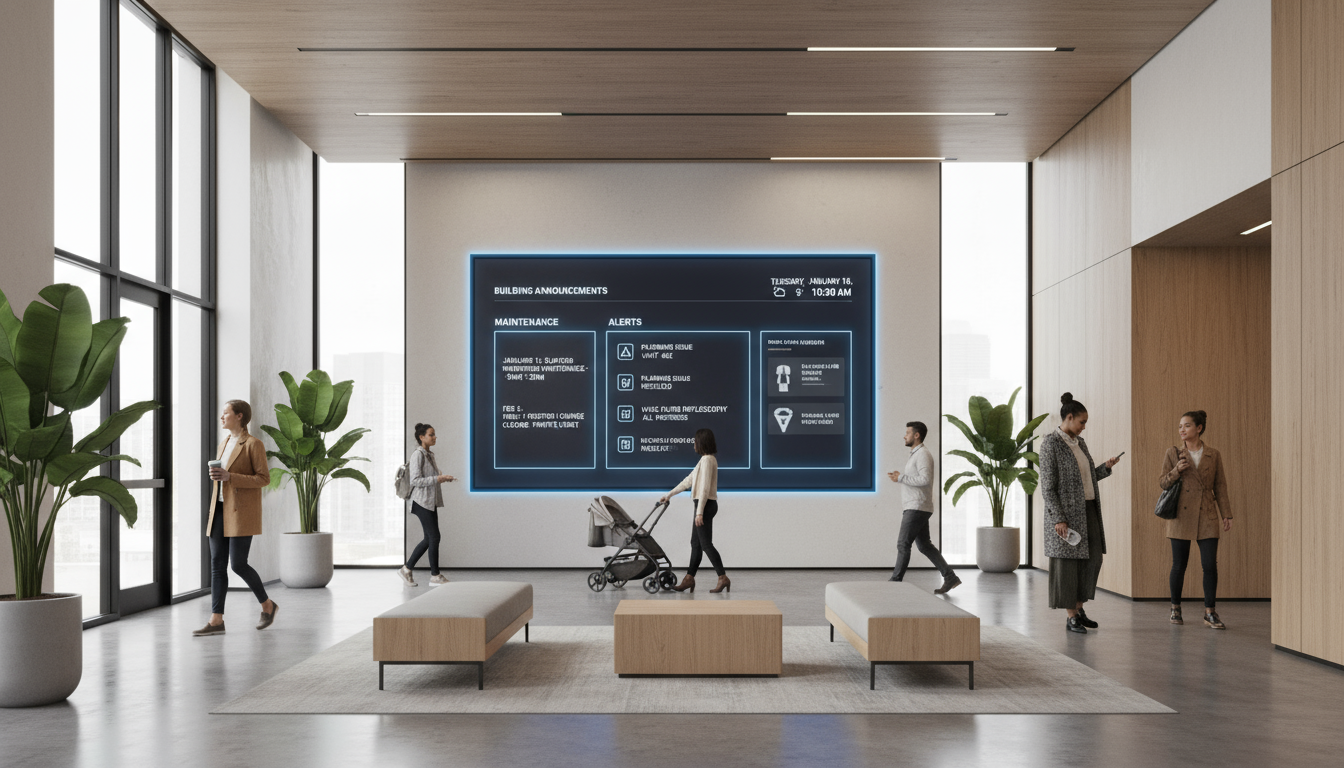
1. Streamline Announcements and Notices
In residential buildings, traditional methods of communication—like printed notices on corkboards or door-to-door memos—are inefficient and often overlooked. Smart displays provide an instant, visible, and eco-friendly solution for delivering announcements. Property managers can use them to post reminders about upcoming maintenance, water supply interruptions, fire drills, or community meetings.
By centralizing these updates, smart displays ensure that residents receive the most current information without delay. Unlike paper postings that quickly become outdated, digital boards can be updated in real time. This flexibility allows administrators to adjust content instantly, reducing confusion and increasing transparency within the community.
Additionally, strategic placement in high-traffic areas such as lobbies, elevators, and mailrooms ensures maximum visibility. Smart displays thus serve as dynamic digital bulletin boards that keep residents informed and engaged in their daily building life.
2. Enhance Emergency Communication

In emergencies, every second counts. Smart displays can play a crucial role in quickly disseminating vital safety information to all residents. Unlike mobile alerts, which can be missed or delayed due to signal issues, smart displays provide an on-site visual system that captures attention immediately.
During events like power outages, severe weather, or fire alarms, digital screens can flash warnings, display evacuation routes, and provide clear step-by-step safety instructions. When connected to centralized building management systems, they can even trigger automated alerts that respond to sensor data—such as fire detection or gas leaks—ensuring rapid communication without human intervention.
This proactive use of smart displays transforms them from convenience tools into essential safety instruments. They help reduce panic and confusion by guiding residents with clear, visually engaging, and language-accessible messages.
3. Display Real-Time Community Updates
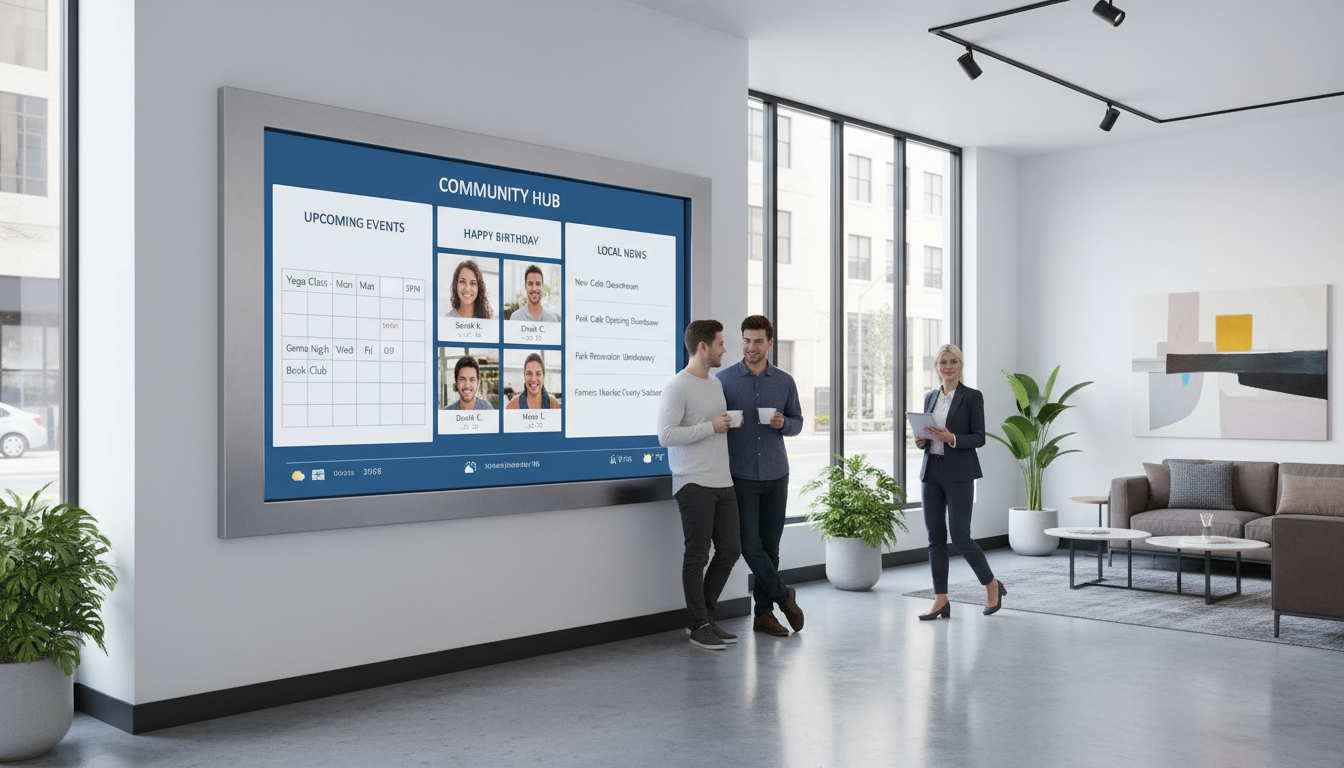
Keeping residents informed about community life fosters a sense of belonging. Smart displays can showcase real-time updates on social events, club meetings, recreational schedules, and resident spotlights. This approach builds engagement and encourages participation in building activities.
Imagine a screen near the entrance displaying upcoming yoga sessions, book club gatherings, or pool cleaning schedules—all easily visible to passersby. With cloud-based management systems, property staff can update these events instantly and even include countdown timers, weather widgets, or local news tickers.
Furthermore, these displays can highlight achievements or birthdays, creating a friendly and inclusive environment. The more residents see their community reflected on screen, the stronger their sense of connection and pride becomes. It’s a simple yet powerful way to transform a building into a truly interactive neighborhood.
4. Simplify Maintenance and Service Requests

Managing maintenance efficiently is vital in residential buildings, and smart displays can make this process seamless. Instead of relying solely on phone calls or email forms, digital boards can integrate with service request systems to allow quick reporting of issues or to show the status of ongoing maintenance.
For example, a lobby display could list scheduled repairs, such as elevator maintenance or plumbing checks, with live status indicators. Residents can scan a QR code directly from the display to report an issue or follow progress updates. This transparency reduces redundant inquiries and helps management teams handle maintenance in a more organized and accountable manner.
Additionally, smart displays can feature rotating tips for home care, waste disposal schedules, or water conservation reminders—helping residents contribute to a more sustainable building environment.
5. Strengthen Security and Visitor Management

Security is a top concern in any residential complex, and smart displays can play a supporting role in maintaining safety. Integrated with visitor management systems, they can show visitor check-in details, restricted access zones, and even parking information in a professional and discreet manner.
For instance, a display near the entrance could greet guests with check-in instructions, while another inside the lobby shows authorized visitor passes or delivery notifications. When connected to surveillance and access control systems, these screens can also broadcast security reminders—like ensuring doors are closed or reporting suspicious activity.
Such integration not only strengthens the building’s safety protocols but also reduces staff workload by automating essential communication steps. The result is a smarter, safer, and more transparent living environment.
6. Promote Eco-Friendly Practices
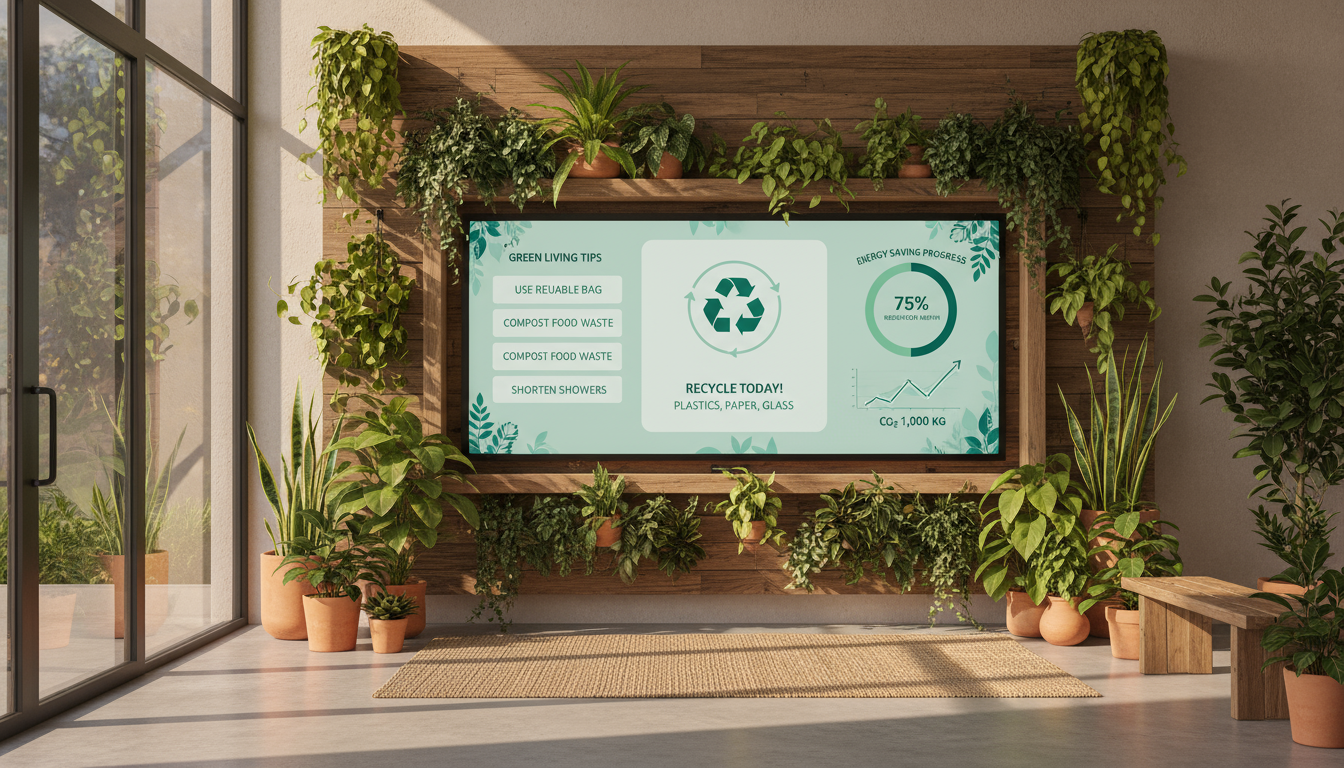
Smart displays contribute to sustainability by eliminating paper waste from flyers, posters, and notices. However, they can also promote a greener lifestyle among residents by featuring environmental campaigns, recycling tips, and energy-saving reminders.
For example, property managers can post daily energy consumption updates or share infographics on reducing water usage. During special initiatives like “Green Week,” screens can motivate residents to participate in eco-friendly challenges, such as switching off unused lights or reducing plastic waste.
By combining education and visibility, smart displays encourage small behavioral changes that collectively make a big difference. They help position the building as a forward-thinking, environmentally responsible community.
7. Improve Resident Feedback and Engagement
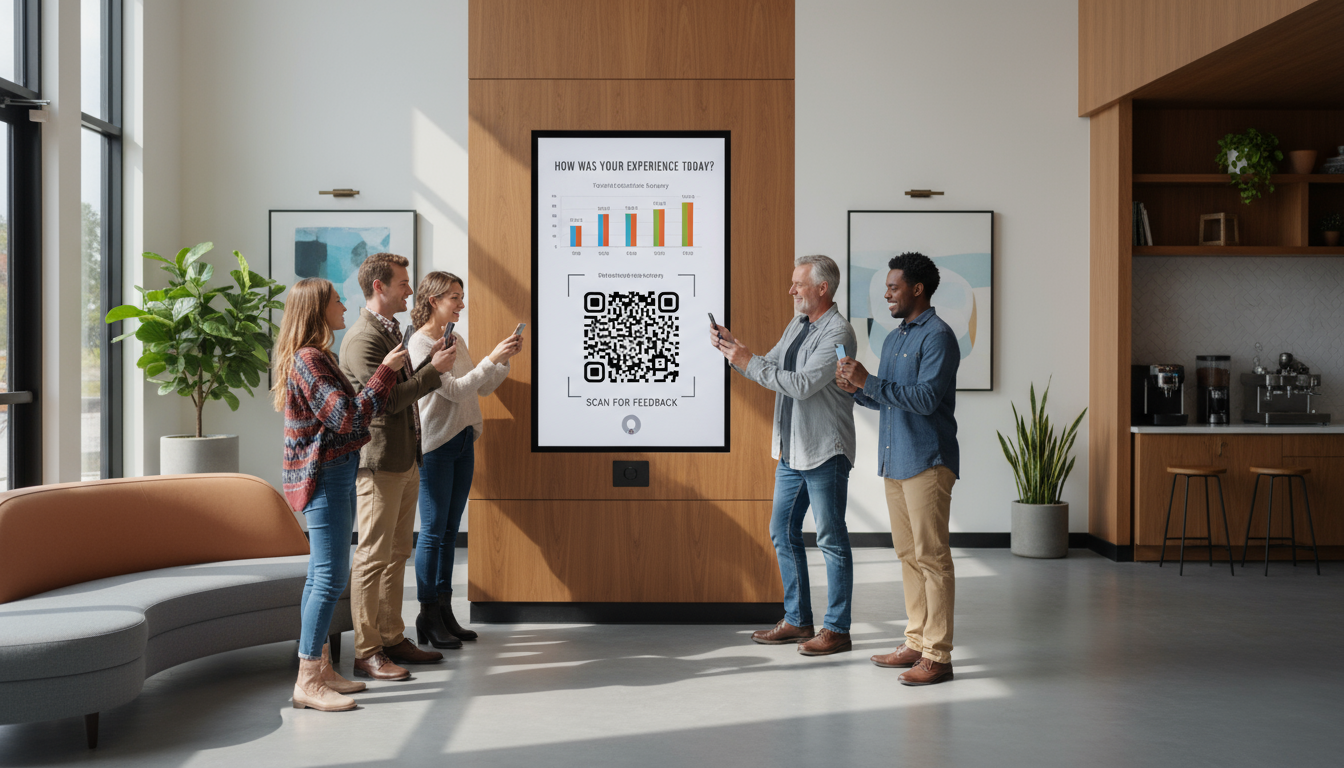
Effective communication goes both ways, and smart displays can serve as digital touchpoints for gathering resident feedback. When linked to survey tools or QR-enabled feedback forms, they make it easy for residents to share opinions on building management, amenities, or upcoming projects.
Displays can also present live poll results or suggestion highlights to show that management values input and acts on it. This transparency builds trust between residents and administrators, creating a cooperative and positive atmosphere.
By turning static announcements into interactive experiences, smart displays foster engagement and ensure residents feel heard. It’s not just about broadcasting information—it’s about building an open, connected community where communication thrives.
RELATED POSTS