

In the past, retail promotions relied heavily on static signage, posters, and printed materials that offered limited flexibility and engagement. As technology advanced, traditional advertising methods became insufficient to capture the attention of today’s fast-moving and tech-savvy shoppers. The retail landscape underwent a digital transformation, where promotional content shifted from static to interactive formats displayed on digital boards and screens across shopping centers. This evolution allowed retailers to adapt messages instantly—showcasing flash sales, seasonal offers, and product highlights in real time. Moreover, digital promotions provided the opportunity to synchronize marketing campaigns across multiple branches or locations, ensuring consistent branding and messaging. This shift not only modernized the visual appeal of retail environments but also enhanced customer experience by creating dynamic and visually stimulating spaces that encourage purchase decisions.
Beyond aesthetics, digital promotions became a vital strategy for data-driven marketing. By integrating software that tracks performance metrics such as dwell time, engagement rate, and conversion, retailers gained valuable insights into consumer behavior. These insights allowed them to refine promotional strategies for maximum impact, ensuring that each message resonated with the right audience at the right time. Unlike traditional methods, digital systems enable retailers to adjust campaigns instantly based on stock levels, customer demand, or even weather patterns—making promotions far more efficient and relevant. In essence, digital displays turned once-static environments into responsive, customer-centric retail spaces that fuel both brand loyalty and revenue growth.
Enhancing Customer Engagement Through Interactive and Personalized Content

Today’s shoppers seek more than just discounts—they crave immersive experiences that connect with their interests and lifestyles. Digital promotions in retail spaces cater to this demand by allowing brands to deliver interactive and personalized content. For example, touchscreen kiosks or smart mirrors can recommend products based on shopper preferences or browsing history. QR codes and NFC tags displayed on digital boards can instantly link customers to online stores, social media campaigns, or exclusive loyalty programs, bridging the gap between physical and digital retail. These elements transform shopping from a passive activity into an interactive journey, keeping consumers engaged longer and encouraging impulse purchases.
Moreover, digital signage offers flexibility in tailoring messages for specific demographics, times of day, or even traffic flow. For instance, a clothing retailer can display workwear promotions during morning rush hours and shift to casual wear ads in the evening. Similarly, food courts can promote breakfast combos early in the day and dinner specials later. This targeted approach ensures that every digital promotion reaches customers when they are most receptive, ultimately enhancing engagement and boosting sales. Interactive screens also provide retailers with real-time feedback through customer interactions—data that can be analyzed to fine-tune campaigns and anticipate consumer trends.
By combining technology with creativity, retail environments become more than just spaces for shopping—they evolve into hubs of personalized experience. This dynamic engagement not only improves customer satisfaction but also establishes a stronger emotional connection between the brand and its audience, turning one-time visitors into loyal advocates.
Maximizing ROI and Streamlining Operations With Real-Time Digital Management

Implementing digital promotions does not only benefit customer experience but also significantly optimizes operational efficiency and return on investment (ROI). Digital display networks can be centrally managed through cloud-based platforms, enabling marketing teams to schedule, update, and monitor content across multiple locations simultaneously. This eliminates the costs and delays associated with printing, shipping, and manually replacing traditional posters. For retail chains operating on a large scale, centralized management ensures brand consistency and operational agility—allowing rapid responses to sales trends, inventory updates, or market shifts. Retailers can run A/B tests on promotional visuals, track engagement data, and adjust campaigns instantly to ensure that every message contributes to measurable results.
Additionally, digital promotions can integrate seamlessly with point-of-sale (POS) systems and customer relationship management (CRM) tools. This connection enables automatic updates to promotions based on inventory levels, loyalty program data, or recent purchases. For instance, if a particular product is selling fast, the system can automatically prioritize that product on digital displays to maximize momentum. Conversely, slow-moving items can be spotlighted with limited-time discounts to encourage sales. This level of automation creates a smarter retail ecosystem where decisions are driven by real-time insights rather than assumptions.
Ultimately, digital promotions empower retailers to balance creativity with efficiency—delivering impactful, cost-effective marketing strategies that align with evolving consumer expectations. As the retail industry continues to digitize, those who leverage dynamic display technologies stand to gain a competitive edge, achieving not only higher sales but also stronger brand presence in an increasingly visual marketplace.
The Role of Data Analytics in Shaping Digital Retail Campaigns

Data analytics has become a cornerstone in the success of digital promotions within retail environments. With every customer interaction captured through sensors, Wi-Fi tracking, and purchase data, retailers can gain deep insights into consumer preferences and behavior patterns. This data enables marketers to craft precise, evidence-based promotional campaigns that speak directly to their audience’s needs. For example, analytics can reveal which promotions generate the most engagement, which areas of a store attract the highest traffic, and what time of day customers are most likely to make purchases. Armed with this information, brands can design targeted digital ads that reach customers when and where they are most likely to convert.
Furthermore, integrating artificial intelligence (AI) and machine learning (ML) allows for predictive modeling that anticipates consumer trends before they fully emerge. By analyzing historical data and external factors like holidays or weather conditions, AI-driven systems can recommend when to push specific promotions or adjust product pricing. This predictive capability turns data into actionable strategies, helping retailers maintain an agile marketing approach that stays ahead of competitors. It also ensures that marketing budgets are used efficiently by focusing resources on the highest-performing promotions.
In a market where customer behavior changes rapidly, data analytics ensures that digital promotions remain relevant, engaging, and profitable. When harnessed effectively, data becomes the invisible engine powering every successful retail display, ensuring maximum ROI and sustained business growth.
Conclusion: Building the Future of Retail Through Sustainable Digital Solutions
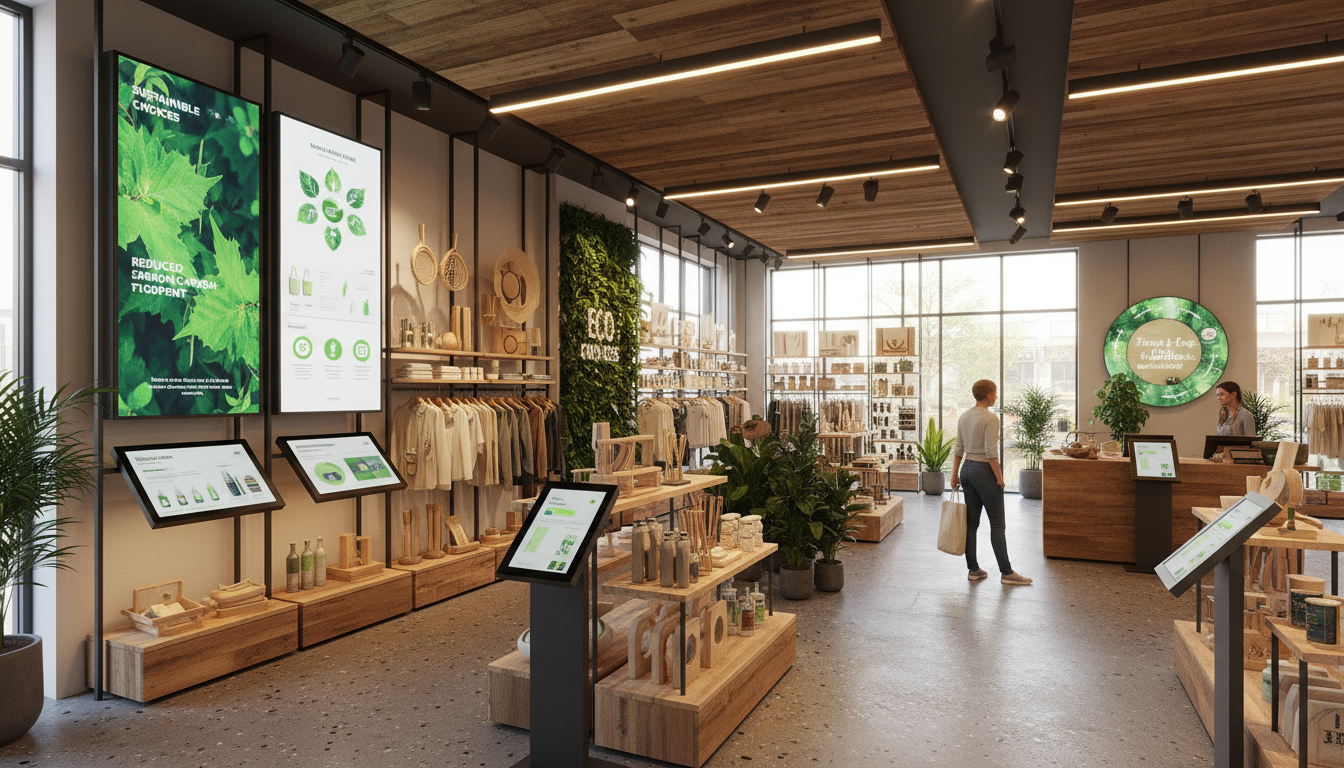
While the primary goal of digital promotions is to drive sales and engagement, sustainability is becoming an equally important factor in modern retail operations. Transitioning from printed posters and banners to digital displays significantly reduces paper waste, ink use, and shipping-related carbon emissions. Retailers are increasingly aware of the environmental footprint of their marketing strategies, and digital solutions present a sustainable alternative that aligns with global environmental goals. LED and LCD screens, when managed efficiently, can operate with minimal energy consumption—especially when combined with motion sensors or scheduled display times to conserve power.
Moreover, digital signage allows for long-term reuse and reprogramming, eliminating the need for physical replacements each season. This adaptability not only saves costs but also contributes to eco-friendly business practices. Retailers can communicate their sustainability initiatives directly through their digital screens—educating customers about responsible shopping habits, recycling programs, or ethical sourcing. This not only strengthens brand image but also resonates with environmentally conscious consumers who prefer supporting sustainable brands.
As retail spaces evolve, digital promotions stand at the intersection of technology, creativity, and responsibility. The future of retail marketing will continue to merge innovation with sustainability, ensuring that business growth and environmental stewardship go hand in hand. By adopting digital solutions, retailers are not only enhancing the shopping experience but also contributing to a greener, more forward-thinking retail ecosystem.
RELATED POSTS